Last week the School of Oriental and African Studies in London held the Inaugural Lecture of Zartoshty Professor Almut Hintze, an eminent scholar of the Zoroastrian religion and Indo-Iranian languages. Below is her video-- I suggest starting at 12:30. It's a about an hour long and a good survey of the religion. My favorite part is her discussion of how and why the word 'daeva' became a negative term to describe a class of demons in Zoroastrianism that chose to follow Angra Mainya. The synopsis (at the end of the lecture) was also a nice addition.
Roof of Hafez's Tomb

Showing posts with label Film. Show all posts
Showing posts with label Film. Show all posts
Saturday, February 9, 2013

Saturday, July 28, 2012
Vacation time! تعطیل
I just finished the Summer Workshop at IU-- and obtained a year's worth of language training in 8 weeks! Now I have some time off before starting fall classes-- which include Intermediate Persian, Urdu, and Middle Persian (Pahlavi). This summer has felt like a full Persian immersion and I've learned so much. One of my favorite parts about this class has been the exposure to Iranian Cinema. Here are some of my favorite films: (just a warning-- none of them have particularly happy endings, but I'm learning to appreciate the contemplative quality of Persian movies!). Enjoy :)


A Separation:

A married couple are faced with a difficult decision, to improve the life of their child by moving to another country or to stay in Iran and look after a deteriorating parent who has Alzheimers.
http://www.movie2k.to/movie-953983-A%2bSeparation%2b*subtitled*.html
(ignore the advertisement placed in front of the screen)
(ignore the advertisement placed in front of the screen)
Marmoulak (The Lizard):
Although a comedy, the film makes serious points about the clergy, religion, society in Iran, and life in general. Due to the film's perceived attacks towards clerics, the movie was banned from theatres in Iran after only being on screen for one month.
The Pear Tree:

This is the story of a serious man in the face of his intellectual black out as he finds more meaning to his life while rummaging through his childhood memory.
Sunday, July 22, 2012
Iftar in Mashhad
These are a series of photos from Fars News Agency by Meysam Dehghani taken in Mashhad, Iran. Muslims gather at the Shrine of Imam Reza at sundown to break their fast--which is called "Iftar" during the month of Ramadan. Traditionally, a date is eaten first alongside a cup of tea. "Ramadan Mubarak" to my Persian friends!


For more information about Ramadan in Iran:
Monday, July 2, 2012
Persian Dombak
The musician featured in this video is Arjang Faramarzi from the Mastan Ensemble. He's playing an instrument known as the dombak or goblet drum-- which is a direct descendant of drums used by the ancient Sumerians. It is an essential instrument in both the classical and the popular music of Persia. Founded in 2005 by Parvaz Homay, The Mastan Ensemble has become one of the most prominent traditional music groups from Iran. Homay's ensemble consists of eight highly proficient musicians who promote the Sufi tradition of living consciously and creatively.
Friday, June 29, 2012
Persian Medicine: Islam & Science
After the midterm exam, our class watched a fascinating documentary about the contributions to medicine and science from the Islamic world. Inspired by this film, I collected a number of images from Arabic and Persian manuscripts which contain anatomical drawings. Below are some photo-collages that I made.
Optometry and pharmacology were fields that were especially advanced during the time of the "Translation Movement" (800 A.D. to 1150 A.D.) which was centered in Baghdad. Medical textbooks were collected from all parts of the world and translated into Arabic-- culminating into the world's most sophisticated and expansive resource of medical knowledge in Medieval times.


Optometry and pharmacology were fields that were especially advanced during the time of the "Translation Movement" (800 A.D. to 1150 A.D.) which was centered in Baghdad. Medical textbooks were collected from all parts of the world and translated into Arabic-- culminating into the world's most sophisticated and expansive resource of medical knowledge in Medieval times.


Wednesday, June 27, 2012
More on Zoroastrianism


The significance of the Faravahar, the symbol of Zoroastrianism
1. The figure inside is that of an old man, representing wisdom of age.
2. There are two wings which have three tiers of feathers. These three tiers symbolize "good thoughts, good words, and good deeds".
3. The lower part of the Faravahar consists of three more tiers of feathers which represent "bad reflections, bad words and bad deeds" --the causes of misery and misfortune for human beings.
4. There are two ribbons on each side of Faravahar which symbolize positive forces and negative forces. The former is directed toward the face and the latter is located at the back. This also indicates that we have to proceed toward the good and turn away from bad.
5. The ring in the center symbolizes the eternity of the universe or the eternal nature of the soul. As a circle, it has no beginning and no end.
6. One of the hands points upwards, indicating that there is only one direction to choose in life and that is forward. The other hand holds a ring. Some interpreters consider that as the ring of covenant, representing loyalty and faithfulness--the basis of Zarathustra's philosophy.
Since, the ring of covenant which located in the center of the Faravahar's trunk is the symbol of the immortality of the spirit, it can be inferred that the more human beings try to promote their own Faravahar, the more their spirit will be elevated in heaven after they pass away.
(article from Iransara.info)
Thursday, June 21, 2012
Whirling Dervishes
Sufi whirling is a form of Sama or physically active meditation which originated among Sufis, and is still practiced by the Sufi Dervishes of the Mevlevi order. It is a customary dance performed within the Sema, or worship ceremony, through which dervishes (also called semazens) aim to reach the source of all perfection, or kemal. This is sought through abandoning one's nafs, egos or personal desires, by listening to the music, focusing on God, and spinning one's body in repetitive circles, which has been seen as a symbolic imitation of planets in the Solar System orbiting the sun.
This video was filmed in Istanbul. The female dervishes are wearing the red, yellow, and lavender skirts, while the men are in white.
When spinning, the right hand is lifted, palm-out, towards god and his gifts. The left is palm down towards the earth, to both draw forth its sustenance and to deliver god's gifts of the spirit to humanity.


This video was filmed in Istanbul. The female dervishes are wearing the red, yellow, and lavender skirts, while the men are in white.
When spinning, the right hand is lifted, palm-out, towards god and his gifts. The left is palm down towards the earth, to both draw forth its sustenance and to deliver god's gifts of the spirit to humanity.


Friday, June 15, 2012
Videos on Ancient Persia
In preparation for taking 'Middle Persian/ Pahlavi language' next semester with Professor Choksy, I've been trying to brush up on the history of Pre-Islamic Persia. So far, I've watched two documentaries that review the empires of the Achaemenids, Seleucids, Parthians, and Sassanids with Cyrus the Great, Darius the Great, Xerxes, and Ardashir playing the leading roles. While these documentaries are not very thorough, they do provide some great footage of Pasargadae, Persepolis, and Ctesiphon-- especially the incredible architectural and engineering achievements of the ancient Persians.
Here's a documentary available on YouTube in 5 parts titled Engineering an Empire -The Persians :
The second documentary, titled Iran: The Forgotten Glory, is available on NetFlix for instant viewing.
Monday, June 11, 2012
Karbala & Shi'ism
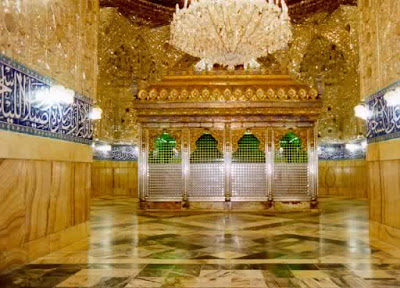
Today I finished watching a documentary available on Netflix titled "Pilgrimage to Karbala". It follows the journey of a 'pilgrimage bus' from Tehran to Karbala, Iraq--where Imam Hussein's shrine is located. The film does a terrific job explaining the concept of martyrdom in Shia Islam and connects this concept to the Islamic Revolution of 1979, the Iran-Iraq war of the 80s, and Iran's continued resistance to foreign domination. The pilgrims were a diverse group of men and women of various ages and professions who find themselves making this precarious trip to Iraq in the summer of 2006. For anyone interested in understanding what conservative Shi'ism looks like today and how it influences political ideology--this is a good place start. :)



Sunday, June 10, 2012
Humanities & Foreign Policy
This is a short lecture presented by IU professor, Jamsheed Choksy, who specializes in Iranian Studies, Indian subcontinental studies, Zoroastrianism, Islam, and Manichaeism. He also writes about Middle Eastern politics for the Huffington Post, the Wall Street Journal, and FP. I had the pleasure of taking his course--Iranian Civilization: Poets, Prophets, and Kings during my first semester at IU. His presentation to the National Humanities Alliance (Sep. 2011) highlights the importance of funding the humanities as academic scholarship can contribute to improving American foreign policy and national security.
Tuesday, June 5, 2012
Tribute to Shirin Neshat
As a photographer and video-artist, Shirin Neshat was recognized for her portraits of women entirely overlaid by Persian calligraphy (notably through the Women of Allah series). She also directed several videos, among them Anchorage (1996) and, projected on two opposing walls: Shadow under the Web (1997), Turbulent (1998), Rapture (1999) and Soliloquy (1999). She currently lives in New York City.
Video from December 2010, Art in Exile

Slideshow
Video from December 2010, Art in Exile
Subscribe to:
Posts (Atom)